Luxury Financial District Hotels USA: Asset & Operational Guide
Urban commercial centers in the United States occupy a unique nexus of global capital allocation, legal arbitration, and executive mobility. Within these dense vertical ecosystems, high-end hospitality assets serve as physical extensions of the corporate boardroom. Rather than functioning purely as transient accommodation, tier-one properties situated within primary commercial cores operate as secure environments where high-stakes negotiations, confidential board meetings, and cross-border capital transactions occur daily. The intersection of institutional finance and five-star hospitality demands a specialized built environment capable of meeting rigorous standards for discretion, technological redundancy, and physical security.
Evaluating this real estate submarket requires moving past conventional hospitality metrics like average daily rate (ADR) and revenue per available room (RevPAR). Analysts, institutional investors, and corporate travel directors must examine how structural changes in white-collar work models, municipal tax policies, and zoning laws reshape the commercial viability of high-end downtown properties. The shift toward hybrid corporate schedules and mixed-use urban development forces central core operators to balance traditional business utility with evolving expectations for wellness infrastructure, architectural preservation, and environmental resilience.
This reference manual establishes a rigorous structural framework for evaluating, developing, and operating premier high-end hospitality assets within major metropolitan commercial cores. By dissecting spatial economics, technological integration, operational risk management, and long-term asset governance, this guide provides complete clarity for professionals navigating the upper echelon of urban commercial lodging.
Understanding luxury financial district hotels usa

Analyzing the operational and market reality of luxury financial district hotels usa requires deconstructing the intersection of high-density real estate, corporate governance, and elite consumer behavior. A common analytical misstep is treating these properties as interchangeable with luxury resorts or leisure-oriented boutique hotels located in cultural districts. Commercial core properties operate under an entirely different set of demand drivers, governed by the rhythms of financial markets, legal proceedings, regulatory reporting cycles, and corporate restructuring announcements.
A primary risk in evaluating this sector involves oversimplifying the relationship between physical location and asset performance. While proximity to regional stock exchanges, federal courthouses, and central banking institutions remains mandatory, modern corporate travelers demand seamless integration between high-speed digital infrastructure and physical privacy. Properties that rely solely on heritage prestige or classic interior design without investing in enterprise-grade cybersecurity, acoustic isolation, and flexible meeting spaces face rapid erosion of corporate client loyalty.
Contemporary municipal dynamics also introduce friction. Properties situated in dense urban cores must navigate shifting property tax assessments, strict historic preservation building codes, and complex public-private transit dependencies. Recognizing these structural variables prevents analysts and investors from applying generic hospitality frameworks to assets that function fundamentally as high-security nodes within the national financial architecture.
Deep Contextual Background and Evolution of Urban Core Hospitality
The historical trajectory of elite accommodations within American commercial centers mirrors the evolution of the national economy from industrial manufacturing to global financial dominance. During the late nineteenth and early twentieth centuries, urban core hotels were grand, opulent railway and mercantile termini designed to house visiting industrialists, financiers, and statesmen who conducted business within walking distance of the central exchange. These properties featured expansive public lobbies, private dining rooms, and telegraph stations that mirrored the communication needs of an expanding capitalist empire.
The post-Second World War suburbanization wave caused a temporary deceleration in urban core investment, as corporate offices and residential populations dispersed toward highway-adjacent office parks. However, the late twentieth century catalyzed a powerful downtown renaissance. Deregulation of global financial markets, the expansion of international trade, and the revitalization of historic urban centers triggered a massive wave of adaptive reuse and new construction. Historic stone-clad banking headquarters and neoclassical insurance monoliths were meticulously converted into ultra-luxury flagship hotels, preserving monumental masonry exteriors while updating interior footprints to house advanced mechanical and digital infrastructure.
Entering the contemporary era, these high-end assets have had to absorb the structural shocks of remote work acceleration, shifting corporate travel budgets, and rising demands for environmental sustainability. The modern evolution requires properties to function as self-contained micro-ecosystems offering integrated wellness, private club spaces, and hyper-secure digital networks. Understanding this historical arc clarifies why current development strategies prioritize adaptive flexibility and technological integration over static architectural grandeur.
Conceptual Frameworks and Mental Models for Financial District Assets
Evaluating the performance and strategic positioning of high-end metropolitan properties requires deploying sophisticated analytical mental models.
1. The Proximity and Transactional Velocity Matrix
This model measures how physical nearness to key financial exchanges, legal districts, and corporate headquarters directly correlates with executive booking frequency and premium pricing power during peak market cycles.
2. The Asset Yield Resilience Framework
This framework analyzes how mixed-use integration—combining hotel rooms, branded private residences, and private member clubs—protects asset valuations against sudden downturns in corporate travel budgets.
3. The Frictionless Enterprise Continuum
This mental model maps the guest journey from airport arrival to boardroom presentation, identifying potential latency points in vertical transport, check-in security, and digital connectivity.
Analytical Limitation: Mental models simplify multi-variable market behavior and cannot fully account for unexpected macroeconomic shocks, sudden regulatory shifts, or localized infrastructure failures, serving instead as foundational diagnostic guides.
Key Categories, Variations, and Operational Trade-Offs
High-end hospitality assets located within major American commercial cores manifest in several distinct architectural and operational variations, each presenting unique economic advantages and vulnerabilities.
| Property Category | Primary Architectural Profile | Core Corporate Advantage | Primary Strategic Trade-Off |
| Historic Adaptive Reuse Anchors | Restored 1920s neoclassical stone and masonry banking towers. | Unmatched architectural prestige, thick masonry acoustic isolation, and prime legacy locations. | Inflexible structural floor plates and complex, costly historical maintenance requirements. |
| Supertall Mixed-Use Flagships | Modern glass-and-steel skyscrapers combining hotels, residences, and offices. | Sweeping panoramic views, cutting-edge digital infrastructure, and comprehensive in-building amenities. | High vulnerability to shared elevator congestion and public observation crowds. |
| Boutique Financial Core Sanctuaries | Low-rise or mid-rise boutique properties nestled within historic alleyways or squares. | Exquisite privacy, highly personalized white-glove service, and quiet operating environments. | Limited inventory for large corporate room blocks and constrained meeting space footprints. |
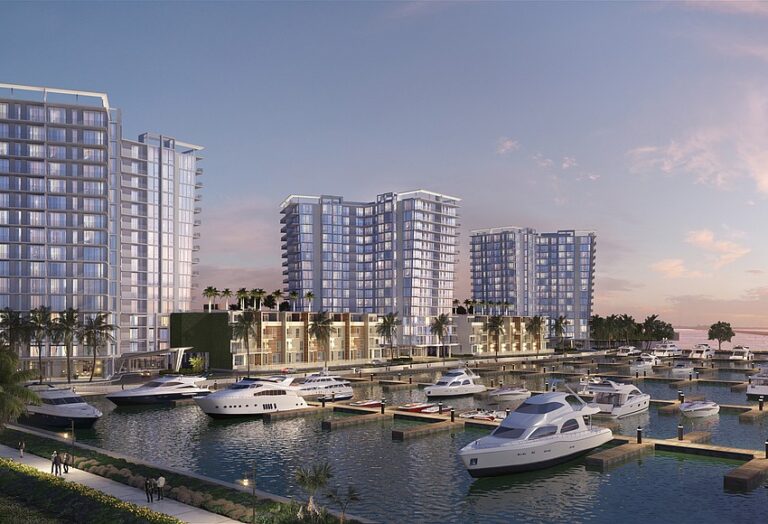
| Waterfront Commercial Towers | High-rise coastal or riverfront hotels serving maritime and international trade hubs. | Dramatic visual backdrops, excellent psychological decompression spaces, and distinct local identity. | Increased exposure to coastal storm risks, humidity corrosion, and transit bridge bottlenecks. |
| Transit-Integrated Executive Hubs | Properties built directly above major subterranean rail and commuter hubs. | Flawless weather-independent access to regional transit and airport express lines. | Persistent ambient structural vibration and higher baseline acoustic management costs. |
| Institutional Sovereign Properties | State-adjacent properties designed to host diplomatic delegations and central bankers. | Maximum government-grade security protocols and specialized diplomatic protocol teams. | Rigid bureaucratic operating guidelines and occasional restricted public access. |
Decision Logic for Institutional Acquisition and Development
Institutional investors and luxury hospitality operators sequence their capital allocation based on the precise maturity and zoning profile of the target metropolitan submarket. For core capital preservation and brand prestige, historic adaptive reuse assets located in primary Tier-1 financial districts remain the preferred benchmark. Conversely, for scalable, technology-forward operations within rapidly expanding Sun Belt commercial hubs, supertall mixed-use developments offer superior floor-plate efficiency and modern utility distribution.
Detailed Real-World Deployment Scenarios
Examining how premier downtown properties perform under severe operational pressure reveals recurring friction patterns that standardized marketing collateral routinely omits.
Scenario A: The Multi-Party M&A Summit Friction Cascade
-
Context: A premier financial district hotel hosts competing legal and investment banking teams advising on a multi-billion-dollar corporate merger over a high-stakes weekend.
-
Constraints: Both corporate delegations demand absolute acoustic privacy, dedicated private elevator access, and secure, isolated local area networks for document review.
-
Failure Modes: Inadequate soundproofing between adjacent executive suites allows confidential merger discussions to bleed through partition walls, while shared public elevators create accidental encounters between opposing negotiation teams.
-
Second-Order Effects: Client trust is severely compromised, resulting in immediate contract cancellation, public reputational damage for the property, and lost future institutional bookings.
Scenario B: The Systemic Power Outage and Digital Grid Failure
-
Context: A severe weather event knocks out the municipal power grid surrounding a legacy financial core, plunging a historic luxury hotel into emergency generator operation.
-
Constraints: The property houses dozens of foreign exchange traders and chief executives relying on continuous, uninterrupted high-frequency data feeds and digital communication channels.
-
Failure Modes: While emergency generators power basic life-safety lighting, the auxiliary cooling systems fail to handle the thermal load generated by the hotel’s legacy server rooms, causing enterprise data switches to overheat and shut down.
-
Second-Order Effects: High-net-worth guests lose critical financial connectivity during a volatile market session, prompting immediate departures and lengthy disputes over corporate service-level agreements.
Planning, Capital Allocation, and Resource Dynamics
The economic architecture of developing and maintaining tier-one commercial core hospitality assets involves complex capital outlays, rigorous regulatory compliance, and hidden structural costs.
| Expenditure Classification | Typical Budget Allocation (%) | Direct Budgetary Elements | Indirect / Hidden Risk Elements |
| Structural Envelope & Historic Preservation | 30% – 40% | Stone restoration, window seal replacements, masonry reinforcement, and seismic retrofitting. | Unforeseen structural remediation costs and stringent historic preservation mandates. |
| Enterprise Digital & Cybersecurity Infrastructure | 15% – 20% | Redundant fiber-optic lines, enterprise-grade firewalls, secure VLANs, and robust Wi-Fi access points. | Rapid hardware obsolescence and high ongoing cybersecurity software licensing costs. |
| Acoustic Mitigation & Interior Engineering | 15% – 20% | Double-paned acoustic glass, solid-core doors, floating floor assemblies, and silent HVAC zoning. | Space loss from thick wall assemblies and complex coordination with interior designers. |
| Back-of-House & Operational Redundancy | 15% – 20% | Heavy-duty emergency generators, redundant water pumps, and secure luggage screening areas. | High maintenance overhead and substantial physical footprint requirements. |
Opportunity Costs and Variability
Failing to invest adequately in enterprise-grade infrastructure and acoustic privacy imposes severe opportunity costs on asset owners. When a luxury property cuts capital expenditure on behind-the-scenes engineering to boost short-term margins, it risks alienating its core corporate clientele. Institutional investors recognize that maintaining top-tier status in primary financial districts requires continuous capital reinvestment to keep pace with evolving corporate security and technological standards.
Operational Tools, Support Systems, and Technological Infrastructure
Managing high-end commercial core hospitality assets requires deploying advanced digital platforms, physical security systems, and administrative management utilities.
-
Encrypted Property Management Gateways: Advanced software suites integrating secure guest profiling, encrypted billing, and private communication channels.
-
Enterprise-Grade Redundant Network Architecture: Multi-carrier fiber-optic backbones providing seamless failover protection and dedicated corporate VLAN provisioning.
-
Acoustic and Decibel Diagnostic Arrays: Precision sensors monitoring environmental sound levels within boardrooms and suites to ensure absolute confidentiality.
-
Automated Building Management Systems (BMS): Sophisticated software controlling climate, lighting, and air filtration based on real-time occupancy and solar load data.
-
Secure Biometric and Keycard Access Control Grids: Granular elevator and floor-level access restrictions preventing unauthorized transit between public and executive zones.
-
VIP Logistics and Private Aviation Coordination Portals: Dedicated concierge platforms managing tarmac transfers, secure vehicle staging, and private helicopter landing manifests.
Systemic Limit: Advanced technical tools cannot compensate for fundamental architectural layout deficiencies. If a property’s structural core lacks isolated service elevators or discrete entry points, software scheduling can only mitigate, not eliminate, privacy risks.
Risk Landscape, Failure Modes, and Compounding Cascades
The risk profile of high-end metropolitan hotels is defined by compounding vulnerabilities where an initial infrastructural or operational failure triggers cascading reputational and financial loss.
Taxonomy of Commercial Core Hospitality Risks
-
The Confidentiality Breach: Acoustic or digital leaks compromising sensitive corporate negotiations, legal arbitrations, or financial transactions hosted on-property.
-
The Vertical Transit Bottleneck: Over-reliance on shared elevator cores causing severe delays for executives adhering to strict time-sensitive schedules.
-
The Digital Redundancy Failure: Network outages or cybersecurity breaches disrupting the high-frequency communication needs of global business travelers.
-
The Macroeconomic Exposure Vulnerability: Heavy reliance on corporate travel budgets leaving asset revenues exposed during broad economic recessions or market corrections.
Compounding Failure Cascades in Practice
Consider a premier financial district hotel hosting an elite gathering of central bankers and international investors. During the opening keynote, a major localized fiber-optic cut severs the hotel’s primary and secondary internet connections. Simultaneously, a localized plumbing failure disables the primary executive elevator bank. Trapped without digital communication tools and unable to reach meeting rooms on upper floors, attendees experience immediate operational gridlock. High-profile guests depart in frustration, canceling future multi-million-dollar annual corporate booking agreements. An initial infrastructure glitch triggers an institutional crisis.
Governance, Maintenance, and Long-Term Adaptation
Sustaining risk-resilient operational standards for premier downtown assets requires disciplined administrative oversight, rigorous physical audits, and proactive policy updates.
Monitoring and Review Cycles
-
Quarterly Cybersecurity and Network Penetration Audits: Comprehensive third-party evaluations of guest network security, firewall integrity, and data encryption protocols.
-
Semi-Annual Acoustic and Privacy Compliance Reviews: Systematic decibel testing and physical security sweeps of all boardrooms and executive suite blocks.
-
Annual Physical Plant and Structural Stress Tests: Rigorous evaluations of emergency power generation, backup water systems, and vertical transport efficiency.
Layered Operational Governance Checklist
-
Establish mandatory confidentiality training and non-disclosure protocols for all front-of-house and back-of-house hospitality personnel.
-
Implement strict physical zoning that separates public leisure guests from corporate and executive floors via dedicated elevator access controls.
-
Maintain fully redundant, multi-carrier internet connections with dedicated bandwidth allocation for high-priority corporate accounts.
-
Conduct routine structural and acoustic inspections to ensure interior soundproofing meets the highest standards for legal and financial arbitration.
-
Forge direct communication channels with municipal emergency services and local precinct commanders to ensure priority response during urban security events.
Measurement, Tracking, and Evaluation Metrics
Determining whether an urban core luxury hotel is successfully maintaining its competitive moat requires balancing quantitative financial metrics with qualitative experiential indicators.
-
Leading Indicators: Corporate contract renewal rates, dedicated VLAN utilization volume, advanced group booking pacing, and concierge request complexity.
-
Lagging Indicators: Average daily rate (ADR) premium over submarket competitors, corporate customer retention percentages, revenue per available room (RevPAR), and net operating income (NOI).
-
Qualitative Signals: Executive feedback regarding acoustic privacy, seamlessness of digital connectivity, perception of physical security, and staff responsiveness during high-stress situations.
Documentation and Record-Keeping Examples
-
Executive Security and Privacy Audit Ledger: A centralized administrative database recording security sweeps, acoustic test results, and network encryption checks.
-
Corporate Client Account Health Matrix: A quantitative tracking document evaluating the volume, profitability, and retention of major financial and legal institutional accounts.
-
Capital Improvement and Maintenance Log: A detailed engineering register tracking the lifecycle, maintenance schedules, and upgrade history of critical building infrastructure.
Common Misconceptions, Myths, and Oversimplifications
Public discourse and superficial travel media narratives surrounding high-end metropolitan hotels are shaped by persistent misconceptions that lead to flawed investment and operational strategies.
-
Myth: Luxury financial district hotels experience dead weekends and low occupancy due to their strict reliance on corporate Monday-through-Friday business travelers.
-
Correction: Leading urban luxury properties successfully capture weekend leisure, wedding, and high-net-worth “city-maxxing” travelers through tailored experiential packages and wellness programming.
-
-
Myth: Historic adaptive reuse properties are inherently inferior to modern glass towers for hosting high-tech corporate summits.
-
Correction: Historic masonry structures frequently provide superior acoustic isolation between rooms compared to lightweight modern glass-and-steel curtain wall construction.
-
-
Myth: Standard hospitality Wi-Fi networks are completely adequate for the data security and bandwidth needs of modern financial executives.
-
Correction: Corporate executives handling sensitive financial data require dedicated, encrypted VLANs and multi-carrier redundant lines that standard hotel networks cannot provide.
-
-
Myth: Location alone guarantees high average daily rates and sustained occupancy within competitive metropolitan submarkets.
-
Correction: Without continuous capital reinvestment in wellness facilities, digital infrastructure, and room design, even perfectly located legacy properties lose market share to newer competitors.
-
-
Myth: Corporate travel buyers prioritize room rate discounts over operational reliability and absolute privacy.
-
Correction: Institutional clients willingly pay premium rates for properties that guarantee zero acoustic leaks, flawless digital connectivity, and absolute discretion.
-
-
Myth: Managing a commercial core luxury hotel is identical to managing a luxury resort property in a tropical destination.
-
Correction: Urban core properties must navigate complex municipal regulations, intense security coordination, and highly compressed, time-sensitive executive itineraries.
-
Ethical, Practical, and Contextual Considerations
The ownership, governance, and operation of tier-one properties within major commercial cores carry profound economic and social responsibilities. When asset operators prioritize short-term profit extraction over rigorous maintenance, cybersecurity upkeep, and staff fair-labor practices, they invite severe operational vulnerabilities. Conversely, cultivating an environment of absolute discretion, physical safety, and technological excellence protects both institutional capital and the privacy of visiting global leaders.
Practically, long-term asset viability in this sector cannot be achieved through passive management. Responsible ownership requires approaching downtown luxury hospitality as a critical component of the national economic infrastructure. By balancing historic architectural preservation with cutting-edge digital readiness, rigorous physical security, and calm editorial judgment, operators ensure these properties endure as trusted, foundational anchors of metropolitan commerce.
Strategic Synthesis and Judgment
Mastering the complexities of high-end hospitality within primary commercial centers requires discarding superficial luxury assumptions in favor of rigorous, multi-dimensional analysis. Whether evaluating the structural feasibility of historic adaptive reuse, auditing enterprise-grade cybersecurity architecture, or navigating complex municipal tax environments, successful long-term asset management is never left to chance. Instead, outcomes root themselves firmly in structural durability, technological redundancy, operational discretion, and disciplined editorial judgment.
An exceptional urban core hotel harmonizes the monumental prestige of architecture with the quiet execution of flawless service and absolute security. True asset resilience emerges through continuous capital reinvestment, proactive risk governance, and an uncompromising commitment to functional excellence. Applying structured frameworks, recognizing underlying failure vulnerabilities, and evaluating commercial core hospitality through a lens of systemic depth allows institutional investors, operators, and strategic planners to navigate the urban enterprise landscape with absolute clarity, confidence, and enduring authority.